

Understanding Positive Reinforcement Dog Training
What is Positive Reinforcement Dog Training?
Positive reinforcement dog training is a training method that focuses on rewarding desired
behaviours instead of punishing unwanted behaviour. This training method involves using positive
reinforcement, such as treats, toys, or praise, to encourage and reward desired behaviours.
When a dog performs a desired behaviour, they receive a reward, which increases the likelihood of
that behaviour being repeated. Positive reinforcement dog training is based on the principles of
operant conditioning, which is a type of learning in which behaviour is modified by its consequences.
This method of training has been shown to be effective and humane. Positive reinforcement training
is one of the most powerful tools for shaping or changing a dog’s behaviour because the reward
makes them more likely to repeat the behaviour.
Positive reinforcement training can also help to increase a dog’s confidence, reduce negative
behaviours such as reactivity and anxiety, and create a positive and harmonious home environment.





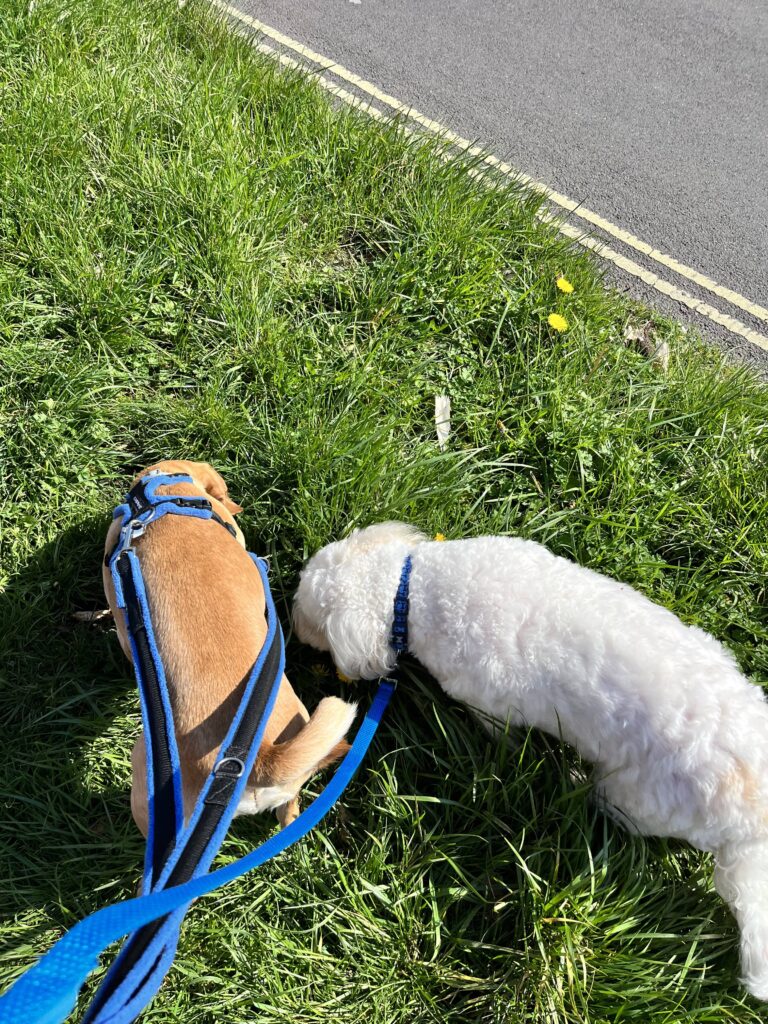
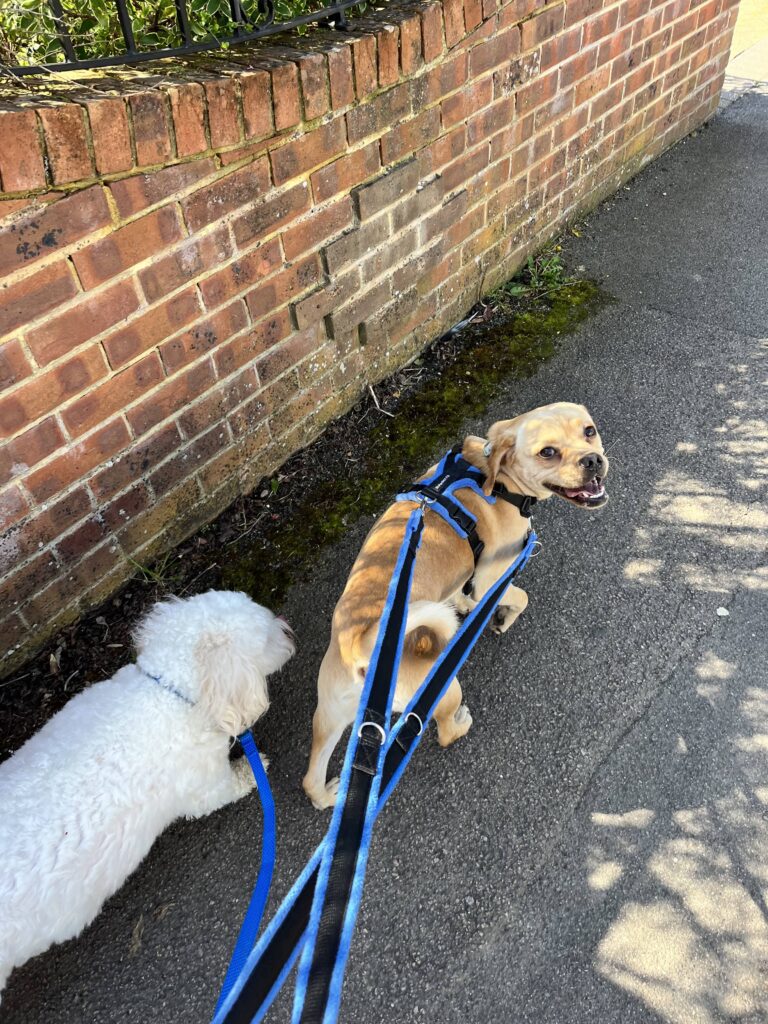
Why Choose Positive Reinforcement Dog Training?
Builds a Stronger Bond
Positive reinforcement training helps to build a stronger bond between you and your dog. Using
positive reinforcement enables trust and helps to strengthen the relationship, making training more
enjoyable for both of you.
Increases Confidence
Building confidence is vital, positive reinforcement is an effective tool. This can help to reduce
anxiety and fearfulness, making your dog happier and more well-adjusted.
Improves Learning
Positive reinforcement training is a more effective way to teach your dog new behaviours. Using this
method your dog is becomes more motivated to learn and is more likely to retain what he has
learned. This can help to speed up the training process and make it easier for your dog to learn more
complex behaviours.
Creates a Positive Environment
Positive reinforcement training creates a positive environment for your dog. When you use positive
reinforcement, your dog is more likely to enjoy training and to look forward to spending time with
you. This can help to reduce stress and create a more harmonious household.
Reduces Negative Behaviours
Positive reinforcement training can help to reduce negative behaviours such as reactivity, fear, and
anxiety. When your dog learns that good behaviour is rewarded, he is less likely to engage in negative
behaviours. This can help to create a safer and more peaceful home environment.
The origins of Positive Reinforcement Dog Training
The origins of positive reinforcement dog training can be traced back to the work of B.F. Skinner and his theory of operant conditioning. Positive reinforcement techniques were later applied to dog training by trainers such as the Breland’s, and the method became more widely accepted in the
1980s and 1990s. Today, positive reinforcement training is a widely accepted and recommended method for training dogs.
Positive Reinforcement Principles
Positive reinforcement principles are based on the idea that behaviour that is rewarded is more likely
to be repeated. This principle is based on the theory of operant conditioning, which was developed
by psychologist B.F. Skinner.
Positive reinforcement principles involve the following:
- Rewarding good behaviour: Positive reinforcement involves rewarding a dog when they perform a desired behaviour. The reward can be in the form of treats, toys, or praise.
- Timing is important: The reward should be given immediately after the desired behaviour is performed. This helps the dog to understand which behaviour is being rewarded.
- Consistency: Positive reinforcement training requires consistency in the rewards given for good behaviour. This helps the dog to understand what is expected of them.
- Avoid punishment: Positive reinforcement training avoids punishment for unwanted behaviour. Instead, the focus is on rewarding desired behaviour.
- Gradual progression: Positive reinforcement training involves gradually increasing the difficulty of the desired behaviour. This helps the dog to learn new behaviours and reinforces desired behaviour.
The Benefits of Positive Reinforcement Dog Training
Positive reinforcement dog training has many benefits for both dogs and their owners.
Here are some of the benefits of using this form of training:
- Builds trust and strengthens the bond between the dog and the owner.
- Encourages desired behaviour.
- Helps to prevent behaviour problems.
- Increases the dog’s confidence.
- Creates a positive association with training.
In conclusion, positive reinforcement dog training has many benefits for both dogs and their owners. It builds trust and strengthens the bond between dog and owner, encourages desired behaviour helps to prevent behaviour problems, increases the dog’s confidence, and creates a positive association with training.
Positive Reinforcement Techniques and Tools
Positive reinforcement techniques and tools are designed to reward desired behaviour and
encourage dogs to repeat that behaviour.
Here are some examples of positive reinforcement techniques and tools that are commonly used in
dog training:
- Treats: Treats are one of the most common forms of positive reinforcement used in dog training. Small, soft, and tasty treats can be used to reward a dog for performing a desired behaviour.
- Praise: Verbal praise is another form of positive reinforcement that can be used to reward a dog for good behaviour. Dogs respond well to positive words and tone of voice, and verbal praise can be used in conjunction with treats to reinforce good behaviour.
- Toys: Toys can be used as a reward for good behaviour. Dogs love to play, and a favourite toy can be a great motivator for training.
- Clicker: A clicker is a small handheld device that makes a clicking sound when pressed. Clicker training is a form of positive reinforcement that involves using the clicker to mark the desired behaviour, followed by a reward such as a treat or toy.
- Target stick: A target stick is a long stick with a ball or other object on the end. Target stick training involves teaching a dog to touch the object on the end of the stick with their nose or paw. This technique can be used to teach dogs a wide range of behaviours, from sitting to jumping.
- Training pouch: A training pouch is a small bag that can be worn around the waist or clipped onto a belt. It is used to hold treats and other rewards during training sessions, making them easily accessible.
Applying Positive Reinforcement Training in professional Dog Training?
At GreenDog Dog Training we use Positive reinforcement training.
Here are some ways that we use positive reinforcement training:
- Reward-based training: using reward-based training methods to reinforce desired behaviour. Rewards can include treats, praise, toys, and other positive stimuli. By using rewards to reinforce desired behaviours, our trainers can teach dogs to associate desirable behaviours with positive outcomes.
- Clicker training: Clicker training is a form of positive reinforcement that involves using a clicker to mark the desired behaviour, followed by a reward. Our dog trainers use clicker training to teach dogs a wide range of behaviours, from basic obedience cues to complex tasks such as agility training.
- Target training: Target training involves teaching a dog to touch a specific object, such as a target stick or a ball.
- Positive environment: Our Professional dog trainers create a positive environment for training by using positive reinforcement techniques and tools. They avoid using punishment or negative reinforcement, which can harm the dog’s emotional well-being and damage the bond between the dog and the trainer.
- Individualised training plans: Our Professional dog trainers create individualised training plans for each dog based on their personality, temperament, and learning style. They use positive reinforcement techniques and tools that are best suited to each dog’s individual needs and preferences.
Implementing Positive Reinforcement Training at Home
Implementing positive reinforcement training at home can be a great way to train your dog in a
humane and effective way.
Here are some steps to follow when implementing positive reinforcement training at home:
- Identify the behaviours you want to reinforce.
- Choose your rewards (make sure your dog likes them!).
- Train in short sessions.
- Be consistent.
- Start with easy behaviours.
- Avoid Punishment.
- Gradually increase difficulty.
- Practice regularly.
Applying Positive Reinforcement Training in professional Dog Training?
At GreenDog Dog Training we use Positive reinforcement training.
Here are some ways that we use positive reinforcement training:
- Reward-based training: using reward-based training methods to reinforce desired behaviour. Rewards can include treats, praise, toys, and other positive stimuli. By using rewards to reinforce desired behaviours, our trainers can teach dogs to associate desirable behaviours with positive outcomes.
- Clicker training: Clicker training is a form of positive reinforcement that involves using a clicker to mark the desired behaviour, followed by a reward. Our dog trainers use clicker training to teach dogs a wide range of behaviours, from basic obedience cues to complex tasks such as agility training.
- Target training: Target training involves teaching a dog to touch a specific object, such as a target stick or a ball.
- Positive environment: Our Professional dog trainers create a positive environment for training by using positive reinforcement techniques and tools. They avoid using punishment or negative reinforcement, which can harm the dog’s emotional well-being and damage the bond between the dog and the trainer.
- Individualised training plans: Our Professional dog trainers create individualised training plans for each dog based on their personality, temperament, and learning style. They use positive reinforcement techniques and tools that are best suited to each dog’s individual needs and preferences.
Positive Reinforcement Training as an Adjunct Therapy
Using Positive Reinforcement training alongside other training methods?
Positive reinforcement training is a humane and effective way to train dogs, but it is not the only training method available. Some dog owners and trainers may choose to use a combination of positive reinforcement training and other training methods to achieve their training goals.
Here are some things to consider when using positive reinforcement training alongside other training methods:
- Understand the risks: Some training methods, such as punishment-based training, can have negative effects on a dog’s emotional well-being and can damage the bond between the dog and the trainer. Before using any training method, it is important to understand the risks and potential consequences. ( WE DO NOT USE AVERSIVE METHODS IN OUR TRAINING)
- Be consistent: If you choose to use a combination of positive reinforcement training and other training methods, it is important to be consistent in your training methods. Use the same cues and rewards each time you train your dog and be consistent in your training techniques.
- Avoid confusion: Using multiple training methods can sometimes confuse a dog and make it difficult for them to understand what is expected of them. Be clear and consistent in your training methods to avoid confusion.
- Use positive reinforcement as the foundation: Positive reinforcement training should be the foundation of any training program, as it is a humane and effective way to train dogs. Other training methods can be used in conjunction with positive reinforcement training, but positive reinforcement should be the primary method used.
- Seek professional help: If you are unsure about how to use positive reinforcement training alongside other training methods, it is always a good idea to seek professional help from a qualified dog trainer who has experience in using multiple training methods.
Using positive reinforcement training alongside other training methods can be effective, but it is important to understand the risks, be consistent, avoid confusion, use positive reinforcement as the foundation, and seek professional help if needed. By using a combination of training methods in a thoughtful and consistent way, you can help your dog learn and grow in a positive and rewarding way.