

Transforming Trauma into Tail Wags
Rescue dogs are often misunderstood and can come with a variety of behavioural issues. However, with the right training techniques, these dogs can become loving and loyal companions. Here, we will discuss some tips and techniques for training your rescue dog.
Patience is Key
When it comes to training a rescue dog, patience is key. These dogs may have experienced trauma or neglect in their past, which can affect their behaviour. It may take some time for them to trust you and feel comfortable in their new home. Don’t rush the training process and be prepared to adjust your approach as needed.
Understanding Rescue Dog Training
What is Rescue Dog Training?
Rescue dog training refers to the process of enabling the dog to safe and secure in their new environment, teaching and conditioning an adopted dog to adjust to its new home environment and family. This training may involve teaching the dog basic foundation skills, socialising with other dogs and people, and helping it overcome any behavioural issues that may have developed because of their history.
Patience, consistency, and positive reinforcement are key to successful rescue dog training.
It’s important to be mindful of the dog’s background and be prepared to adjust training methods if they’re not working. Seeking professional help from a dog trainer or behaviourist may also be beneficial if you’re having difficulty training your rescue dog.
This type of training is an important aspect of caring for a dog that has been adopted from a shelter or rescue organisation. These dogs may have had difficult pasts and may require special attention and training to help them adjust to their new homes.
Here are some tips for understanding rescue dog training:
- Patience is key: Rescue dogs may have a history of abuse or neglect, and it can take time for them to trust their new owners and adjust to their new surroundings. It’s important to be patient and understanding during this process.
- Consistency is important: Consistent training and routines can help rescue dogs feel more secure and confident in their new homes. Stick to a regular schedule for feeding, walking, and training.
- Positive reinforcement works best: Reward-based training methods, such as using treats and praise, can be very effective for training rescue dogs. Punishment-based methods can be counterproductive and may damage the trust between you and your dog.
- Socialisation is key: Socialising rescue dogs with other dogs and people can help them learn to trust and feel more comfortable in new situations. Gradually introduce your dog to new people and animals in a controlled environment.
Seek professional help if needed: If you’re having trouble training your rescue dog, don’t hesitate to seek help from a professional dog trainer or behaviourist. They can provide guidance and support to help your dog adjust and thrive in their new home.






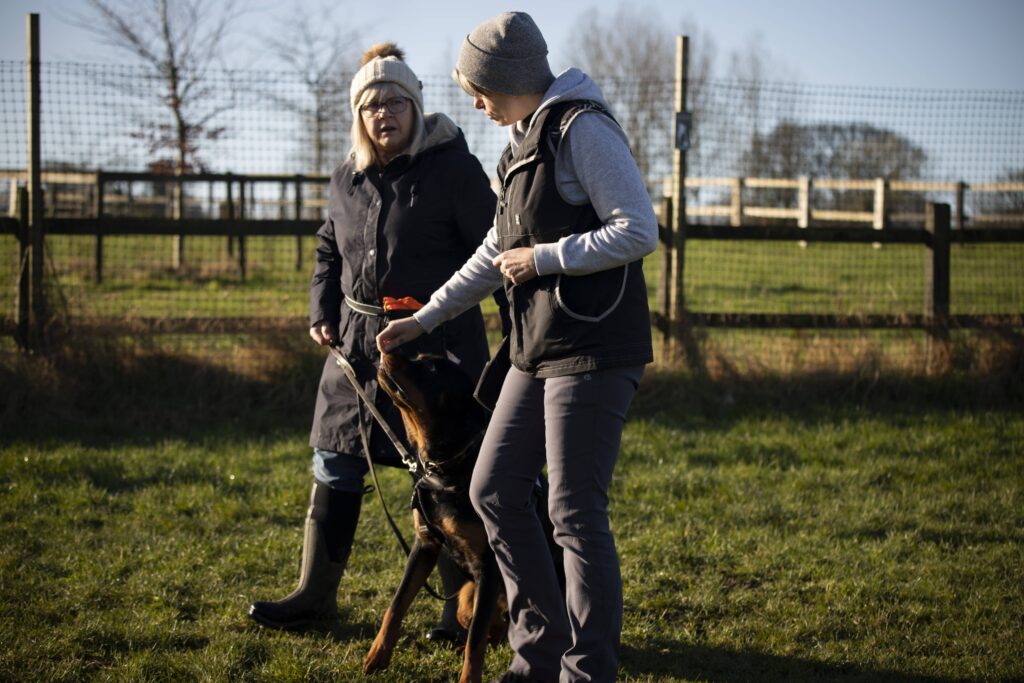


What are the types of Rescue Dog training available?
There are several types of rescue dog training available, depending on the needs of the dog and their new family.
Here are some of the most common types of rescue dog training:
- Obedience training: Obedience training is one of the most important types of rescue dog training, as it helps establish a foundation of good behaviour and communication between the dog and owner. This training may include basic cues such as sit, stay, come, and heel.
- Crate training: Crate training is another important type of rescue dog training that can help with house training and prevent destructive behaviour when the owner is away. This training involves teaching the dog to view their crate as a safe and comfortable space.
- Socialisation training: Socialisation training involves exposing the dog to new people, animals, and environments in a controlled and positive way. This can help the dog feel more comfortable and confident in new situations.
- Behaviour modification training: Behaviour modification training is used to address specific behavioural issues such as anxiety, fear, or reactivity. This type of training may involve desensitisation and counterconditioning techniques to help the dog overcome their fears or anxieties.
- T Touch Training: TTouch (pronounced “tee-touch”) is a specialised training method that incorporates bodywork and non-habitual movement to positively influence a dog’s behaviour and overall health.
Rescue Dog Training Principles
Rescue dog training is based on several principles that are important for helping these dogs adjust to their new homes and families. Here are some of the key principles of rescue dog training:
- Patience: Rescue dogs may have had traumatic experiences in the past, and it can take time for them to trust their new owners and adjust to their new surroundings. It’s important to be patient and understanding during this process.
- Positive reinforcement: Reward-based training methods, such as using treats and praise, can be very effective for training rescue dogs. Punishment-based methods can be counterproductive and may damage the trust between you and your dog.
- Consistency: Consistent training and routines can help rescue dogs feel more secure and confident in their new homes. Stick to a regular schedule for feeding, walking, and training.
- Socialisation: Socialising rescue dogs with other dogs and people can help them learn to trust and feel more comfortable in new situations. Gradually introduce your dog to new people and animals in a controlled environment.
- Exercise: Regular exercise is important for all dogs, but especially for rescue dogs who may have pent-up energy or anxiety. Exercise can help reduce stress and improve overall health and well-being.
- Professional help: If you’re having difficulty training your rescue dog, don’t hesitate to seek help from a professional dog trainer or behaviourist. They can provide guidance and support to help your dog adjust and thrive in their new home.
By following these principles, you can help your rescue dog feel more comfortable and confident in their new home and build a strong bond with your new pet.
The Benefits of Rescue Dog Training
There are several benefits of rescue dog training, both for the dog and for the owner. Here are some of the key benefits:
- Improved behaviour: Rescue dogs may have had difficult pasts and may exhibit behavioural issues such as anxiety, fear, or reactivity. Training can help address these issues and improve the dog’s behaviour, making them feel more safe and comfortable.
- Better communication: Training can help you and your dog communicate more effectively, which can strengthen your bond and make it easier to live together.
- Increased socialisation: Socialising rescue dogs with other dogs and people can help them learn to trust and feel more comfortable in new situations. This can make them more confident and well-adjusted pets.
- Enhanced mental stimulation: Training provides mental stimulation for dogs, which can help prevent boredom and destructive behaviour.
- Improved physical health: Regular exercise is an important part of dog training, which can improve your dog’s physical health and well-being.
- Stronger bond: Training provides an opportunity to bond with your dog and build a strong relationship based on trust and mutual respect.
Simply investing time and effort into training, you can help your dog adjust to their new home and become a happy, and feel safe.
Rescue Dog Training Techniques and Tools
There are several rescue dog training techniques and tools that can be used to help rescue dogs adjust to their new homes and families.
Here are some of the most common techniques and tools:
- Positive reinforcement: Positive reinforcement is a training technique that involves rewarding good behaviour with treats, praise, or other rewards. This technique is effective for teaching basic obedience commands and encouraging good behaviour.
- Clicker training: Clicker training is a type of positive reinforcement training that uses a clicker to mark the desired behaviour, followed by a reward. This technique can be used to teach a wide range of behaviours, from basic obedience commands to more complex tricks.
- Leashes , collars : Leashes , collars are essential tools for rescue dog training, as they allow the owner to control the dog’s movements and prevent them from running away or getting into dangerous situations.
- Treats and toys: Treats and toys can be used as rewards during training sessions, as well as to provide mental and physical stimulation for the dog.
- Training vests and harnesses: Training vests and harnesses can be used to provide additional control and support during training sessions, particularly for dogs that are strong or difficult to handle.
- Muzzles: Muzzles can be used to prevent dogs from biting or engaging in other aggressive behaviours during training sessions. They should only be used under the guidance of a professional trainer or behaviourist.
By using a combination of these techniques and tools, owners can help their rescue dogs adjust to their new homes and become well-behaved and happy pets.
Implementing Rescue Dog Training at Home
Implementing rescue dog training at home can be a rewarding and effective way to help your new furry friend adjust to their new life.
Here are some tips for implementing rescue dog training at home:
- Establish a routine: Establishing a routine can help your rescue dog feel more secure and settled in their new home. Provide a safe space for the dog , somewhere they feel safe and can settle. This includes regular feeding times, exercise, and training sessions.
- Start with basic obedience training: Basic obedience training is a good place to start with rescue dog training. This includes teaching your dog basic commands such as sit, stay, come, and heel. Positive reinforcement techniques such as treats, and praise can be very effective for this type of training.
- Socialise your dog: Socialisation is an important part of rescue dog training, as it helps your dog feel more comfortable and confident in new situations. This includes exposing your dog to new people, animals, and environments in a controlled and positive way.
- Be patient and consistent: Training a rescue dog can take time and patience, so it’s important to be consistent with your training and not get discouraged if progress is slow. Consistency and positive reinforcement are key to successful rescue dog training.
- Seek professional help if needed: If you’re having difficulty with your rescue dog’s behaviour, or if you’re not sure how to train them effectively, consider seeking the help of a professional trainer or behaviourist. They can provide guidance and support to help you and your dog succeed.
By implementing these tips, you can help your rescue dog adjust to their new home and become a happy and well-behaved member of your family.
Applying Rescue Dog Training in professional Dog Training?
Rescue dog training techniques can be applied in professional dog training, as many of the same principles and methods can be used for both rescue dogs and other dogs.
Here are some ways that rescue dog training techniques can be applied in professional dog training:
- Positive reinforcement: Positive reinforcement is a training technique that can be used with all dogs, not just rescue dogs. This involves rewarding good behaviour with treats, praise, or other rewards, which encourages the dog to repeat that behaviour.
- Clicker training: Clicker training is another training technique that can be used with all dogs. It involves using a clicker to mark the desired behaviour, followed by a reward. This technique can be used to teach a wide range of behaviours, from basic obedience commands to more complex tricks.
- Socialisation: Socialisation is an important part of rescue dog training, and it’s also important for all dogs. Professional dog trainers can help socialise dogs by exposing them to new people, animals, and environments in a controlled and positive way.
- Behaviour modification: Behaviour modification techniques can be used to address specific behavioural issues in all dogs, not just rescue dogs. This may involve desensitisation and counterconditioning techniques to help the dog overcome their fears or anxieties.
- Patience and consistency: Patience and consistency are important in all dog training, as it can take time for dogs to learn new behaviours and habits. Professional dog trainers can help owners develop a training plan that is consistent and effective.
In short, rescue dog training techniques can be applied in professional dog training to help all dogs feel safe and be happy pets.
Rescue Dog Training as an Adjunct Therapy
Using Rescue Dog training alongside other training methods?
Rescue dog training techniques can be used alongside other training methods to help dogs learn and develop good behaviour.
Here are some ways that rescue dog training techniques can be used alongside other training methods:
- Combination of clicker training and shaping: Clicker training can be used alongside shaping techniques to help dogs learn new behaviours. Shaping involves breaking down a behavior into smaller steps and rewarding the dog for each step towards the final behaviour. Clicker training can be used to mark each step towards the final behaviour.
- Combination of socialisation and desensitisation: Socialisation techniques, such as exposing the dog to new people and environments, can be used alongside desensitisation techniques to help dogs overcome fears and anxieties. Desensitisation involves exposing the dog to the fear or anxiety-inducing stimulus in a controlled and positive way, gradually increasing the exposure over time.
- Combination of behaviour modification and obedience training: Behaviour modification techniques can be used alongside obedience training to help dogs overcome specific behavioural issues. Obedience training can help establish good behaviour patterns, while behaviour modification techniques can help address specific issues such as separation anxiety or areactivity.
By using a combination of different training methods, including rescue dog training techniques, owners and trainers can help dogs learn and develop good behaviour and become well-behaved and happy pets.
Embracing the Power of Rescue Dog Training
Embracing the power of rescue dog training can be a rewarding and effective way to help rescue dogs adjust to their new environments and feel safe.
Here are some reasons why embracing the power of rescue dog training can be beneficial:
- Helps dogs adjust to new environments: Rescue dogs may have experienced trauma or neglect before being adopted, which can make adjusting to a new home difficult. Rescue dog training can help these dogs feel more secure and settled in their new environment.
- Builds trust and confidence: Training can help build trust and confidence between the dog and their new owner. Positive reinforcement techniques can help the dog associate good behaviour with rewards, which can encourage them to repeat that behaviour.
- Improves behaviour: Rescue dog training can help improve a dog’s behaviour, making them feel Sade and secure and less likely to exhibit problem behaviours such as chewing or barking excessively.
- Strengthens the bond between dog and owner: Training can be a great way for owners to bond with their dogs and establish a strong relationship based on trust.
- Helps dogs become adoptable: Rescue dog training can help make dogs more adoptable by improving their behaviour and making them more appealing to potential adopters.
So, in summary, embracing the power of rescue dog training can be a great way to help rescue dogs adjust to their new lives and become happy and well-behaved pets. With patience, consistency, and positive reinforcement, owners can help their rescue dogs become the best versions of themselves.